Jonathan Rosenbaum has written a book "Goodbye Cinema, Hello Cinephila" in which he discusses all the profound changes that have taken place in the practice of watching and appreciating films in the last few years. It is absolutely true that in my lifetime the changes have been extraordinary, but it beyond the scope of this blog to discuss all that has changed. (Note that this year's Vancouver Film Festival showed no "films"; on celluloid, that is. All were on hard drives or other digital media.) But I would like to offer a personal account of how I came to to love cinema, and how my experiences have changed over the years.
I grew up in the 1950's watching movies at our local suburban movie theater (it was a single screen "downtown" movie theater, built in the 1930's). It showed the latest Hollywood releases. My family would also occasionally watch films on our black and white TV. On channel 9 in New York, the "Million Dollar Movie" was a great source of older movies (while forever impregnating my brain with "Tara's Theme" from "Gone With the Wind", which accompanied every shot of the Million Dollar Movie logo). All, of course, interrupted by commercials.
I think my first experience of something different in cinema came while we were living in Belgium, and I was 16 years old, and I saw the movie "Blow Up" in a local movie theater. While my 16 year old brain certainly had no way of understanding what Antonioni was about, I was certainly aware this this was something different. People playing tennis with no tennis ball? Weird! Cool! What is reality?
The next step in my cinematic education took place in college, where both of my small New England liberal arts colleges would show "art" movies, perhaps to help make up for the fact that we were in the middle of nowhere with nothing to do. At Williams College, I remember a series of Bergman films being shown by Professor Charles Samuels, an English professor. (I also remember the drunken frat boy types, having nothing else to do, making noisy comments.) (Googling, I find the college newspaper, listing a showing of Bergman's "Virgin Spring" on May 2, 1969. I was probably there.) At Bennington College, I was mostly busy practicing piano (a lost cause...), but I do remember seeing Antonioni's "Red Desert" and Godard's "Weekend" in the college auditorium. What strikes me now is how important it was that someone at these colleges felt it was necessary to pay to rent prints of these films and show them to the students. I will always be grateful for that. I wonder if I hadn't had that exposure whether I would have become as involved in watching films as I did later.
My real cinematic education, however, took place the year I lived in New York City in the mid 1970's. The Carnegie Hall Cinema was showing double features (this long before it was Zankeled), and the Bleecker Street Cinema and others were doing the same. I thought nothing of going to a Godard double feature one night, and the next night to a Kurosawa film at Columbia. Again, this was before video of any kind. Though public television might occasionally show an art film, going to a theater was the only way to see these films. I was going to films nonstop.
The next big landmark in my cinemaphiliac development began when I bought my first Betamax video recorder in the early 1980's, and subscribed to cable television while I was a graduate student. (I was no longer in New York City, but nearby.) There was a French language channel, and I remember taping Bresson's "L'Argent" when they showed it. So all kinds of films suddenly became available, and, courtesy of the time-shifting capabilities of a VCR, I could watch a film that someone had decided to broadcast at 4 AM. Still, my primary cinema experiences were in movie theaters in New York. ( I watched my taped movies on an old black and white TV. ) I remember a 2 day marathon showing of Fassbinder's 16 hour "Berlin Alexanderplatz" at a nearby theater, and things like that.
The next twenty years or so involved incremental changes. Recording formats improved (laser discs, DVDs, etc.) and televisions improved. Film distributors finally realized that there was money to be made in releasing their films for purchase at reasonable prices, and the Criterion Collection began releasing the same films I had seen years earlier on the big screen. Thus I could now purchase a high quality copy of Godard's "Breathless" to have at home to watch whenever I wanted, instead of waiting for a broadcast to tape or going to a theater. And I also discovered that I could browse through the local Vancouver Chinese video stores to find interesting films from Hong Kong and elsewhere.
What really changed things, though, was the internet and the advent of multi-regional DVD players. I am not talking about streaming, though, but rather finding a Internet store in Korea that would sell me the latest Korean films (virtually all Korean DVDs have English subtitles), or ordering newly restored classic Russian films from the RUSICO company in Russia, or even discovering that that obscure Hungarian film you wanted was available on DVD in England (but not North America). And having a DVD player which had been altered to subvert the regional code restrictions made it possible to play all these DVD's. And the internet also changed the way I could find out about films; how would I know about the latest Japanese films if it wasn't for all the various forums and websites with information. Columns like Rosenbaum's global discoveries on DVD in Cinemascope magazine, for example, are truly helpful.
For me, two things are important. One is that my cinema is now truly international in scope, and I am free to pursue watching films from anywhere in the world I choose. I don't need to wait for a North American distributor to release a film on either the big screen or DVD, and I am not dependent on what the North American marketplace decides is worthy of release. Secondly, with virtually all films that still exist available in one form or another, I can assemble and curate my own retrospectives. Thus the Bergman series that I first saw in college can now be reassembled in my own basement. If I feel like doing a retrospective of the noted Hong Kong auteur Johnnie To, it can happen.
There are, of course, possible objections to all this. Many will say that cinema only is really itself on a big screen in a movie theater with an audience. For me, the advantages of not having a tall person in front of me eating popcorn, or having a person beside me texting away outweigh the positives of sharing the film with an audience. And if you have a really good TV at home, there is not always a great deal of difference with some of the film theaters I have been in. And, of course, you need to watch as you would in a theater; all lights off, no interruptions, etc. And we are not even talking about commercials, sonic assaults from previews, etc. that happen in most corporate owned theaters.
That said, I am always happy to go see a new film in a good quality movie theater that is not run by a large corporate entity. In Vancouver, the VIFF theater is absolutely wonderful. In New York, the Film Society at Lincoln Center has excellent theaters, and in the Philadelphia area, the theaters run by Renew Theaters are great.
So do we live in a Golden Age for cinemaphiles? One can argue that having everything easily available can be a problem. What do I want to watch? In contrast to the past, when you had to go see that Resnais film showing only once at your local art cinema because you might never have a chance to see it again. Me, I think it's a Golden Age, and I feel very lucky to be around while it's happening.
(I haven't mentioned streaming and Netflix, etc. That's because, although the selection of films can be wonderful, the quality of the video in generally poor. I am old-fashioned and like my films to be stored on shiny round things, and in the best possible picture quality.)
It is interesting to note that my experience with music has been almost the opposite; from an early age, most of my musical knowledge came from listening to recordings. The chances, for example, of hearing a new work by Ligeti in concert would be very slim, even in a large city. But it would show up on an LP or CD eventually. At this point in my life, though, I feel I can only truly hear music properly in live performance. While a well equipped home theater can give you a very close equivalent to the digital projection of a movie theater, even the best possible musical recording cannot give you the same three dimensional quality of sound that a live performance with instruments can give you. Perhaps when recordings have reached the stage of providing one speaker per instrument, things will improve. In the meantime, there is no substitute for hearing a live performance in a good quality space of appropriate size. (I would never go to hear a piano concert or string quartet in Carnegie Hall, for example. Even most of our large scale concert halls today are unsuitable for smaller scale orchestral works.) And I can't help but mention the fact that virtually every piece of music ever recorded seems to be available on YouTube, albeit in poor quality sound for the most part. Copyright does not seem to exist for music on YouTube as far as I can tell.
Sunday, 2 November 2014

Friday, 10 October 2014
The Marriage of Figaro
I topped off a week of activity by going to the Met's new production of Mozart's "The Marriage of Figaro". I sat in our usual preferred location, far to the side of the auditorium, with a partial view of the stage, but right above the orchestra. The sound there is wonderful; you can hear every detail of the orchestra, and the singers are quite present, as well. And in this case, the playing of the orchestra as conducted by James Levine was absolutely breathtaking. It is almost impossible to describe in words how it sounded; every detail was filled with nuance, both highly crafted and alive with energy. The singers were decent, but when the opera got to the ensembles, they were really spectacular. For me, that is when Mozart's operas really shine; again words fail me when I try to describe his incredible creativity and invention in these large scale numbers.
Oh, and the production. I usually don't pay much attention to the sets. It was set in 1930's Spain, and there were rotating things. But the ensemble acting was great, and one should never underestimate the skill involved in staging the action when you have seven characters on stage doing different things. And it was faithful to the libretto, which really matters.
Is "The Marriage of Figaro" my favorite opera? Quite possibly..
The set:

My view of the pit (during intermission):

Oh, and the production. I usually don't pay much attention to the sets. It was set in 1930's Spain, and there were rotating things. But the ensemble acting was great, and one should never underestimate the skill involved in staging the action when you have seven characters on stage doing different things. And it was faithful to the libretto, which really matters.
Is "The Marriage of Figaro" my favorite opera? Quite possibly..
The set:
My view of the pit (during intermission):
Tom Stoppard Goes To India
I saw the Tom Stoppard play "Indian Ink" in New York. Written in 1995, it was having its New York premiere, which is surprising. It was written two years after "Arcadia", and shares the plot device of existing simultaneously in two time periods, and with characters in the present investigating events of the past. In this case, the plot concerns a young British female poet, who in the 1930's went to India (for her health) and died there. A contemporary professor (in the 1980's) is doing research on her life, and interviewing her surviving sister. The staging of the two time periods simultaneously on stage is wonderful, with all kinds of interesting transitions. And, of course, the play is filled with the usual kind of Stoppardian wit and linguistic play, and detailed discussions of all kinds of esoteric things. It is mostly about India, though, and centers around what it meant to be Indian in the 1930's when the English were running the show. The production and acting were mostly excellent; I had some reservations about the lead character, whose voice mostly had one high-pitched mode; and failed to exploit the full range of her character's emotions. I would happily see the play again (which is true for me with any Stoppard play!)

The poet (in the 1930's), in the yellow dress, with her younger sister (who is in the 1980's):


Meeting the Rajah:

The poet (in the 1930's), in the yellow dress, with her younger sister (who is in the 1980's):
Meeting the Rajah:
Tuesday, 7 October 2014
Agon, Again
I went to see the NYC Ballet in another performance of their Stravinsky/Balanchine repertoire, and my third Agon in the last few years. In the meantime, I have also just seen an official release of Agon on DVD in performances recorded by the CBC in Montreal around 1960. (It is surprising that that the current CBC didn't throw away these recordings, given their current urge to obliterate any trace of "elite" culture.) These performances were recorded when the ballet was only about three years old, with many of the original principals performing (Arthur Mitchell!) Seeing dance in two dimensions doesn't really work for me (not to mention music in two dimensions..) But it does help you remember what you have seen in performance.
I have also recently been reading Charles Joseph's excellent book on Stravinsky and Balanchine. He gives very detailed readings of both the genesis and construction of the ballets. The amount of very sophisticated musical and choreographic ideas that went in to these ballets is truly remarkable. In Agon, Stravinsky was working with rhythms from 17th century French dance manuals, and somehow integrating these with his new interest in serial techniques. And Balanchine, with his incredibly sophisticated knowledge of music (he was able to analyze what Stravinsky was doing) created an equally complex structure and vocabulary of gestures which somehow illuminated the music.
What strikes me lately is what a rare and esoteric thing these ballets are, and how lucky we are to be able to see and hear them. In the dance world, most people prefer either traditional ballet or else modern dance, and the small subset of people who like modern ballet is even smaller when you perform it with Stravinsky's serial music. Yet the house was completely full. (Agon has been very popular with audiences from day one; "space-age ballet".)
I saw/heard Apollo, Movements for Piano and Orchestra, Momentum Pro Gesualdo, Duo Concertante, and Agon, all of which I have seen before. The revelation for me this time was Movements for Piano and Orchestra, one of Stravinsky's most Webernesque pieces. Somehow, the integration of the music and the choreography struck me as perfect complements to each other; what seems disjunct in the music suddenly became both flowing and clear. Hard to explain!
I don't think I could ever get tired of Agon; with each performance, I see and hear more. For me, it is the perfect fusion of music and dance.
I have also recently been reading Charles Joseph's excellent book on Stravinsky and Balanchine. He gives very detailed readings of both the genesis and construction of the ballets. The amount of very sophisticated musical and choreographic ideas that went in to these ballets is truly remarkable. In Agon, Stravinsky was working with rhythms from 17th century French dance manuals, and somehow integrating these with his new interest in serial techniques. And Balanchine, with his incredibly sophisticated knowledge of music (he was able to analyze what Stravinsky was doing) created an equally complex structure and vocabulary of gestures which somehow illuminated the music.
What strikes me lately is what a rare and esoteric thing these ballets are, and how lucky we are to be able to see and hear them. In the dance world, most people prefer either traditional ballet or else modern dance, and the small subset of people who like modern ballet is even smaller when you perform it with Stravinsky's serial music. Yet the house was completely full. (Agon has been very popular with audiences from day one; "space-age ballet".)
I saw/heard Apollo, Movements for Piano and Orchestra, Momentum Pro Gesualdo, Duo Concertante, and Agon, all of which I have seen before. The revelation for me this time was Movements for Piano and Orchestra, one of Stravinsky's most Webernesque pieces. Somehow, the integration of the music and the choreography struck me as perfect complements to each other; what seems disjunct in the music suddenly became both flowing and clear. Hard to explain!
I don't think I could ever get tired of Agon; with each performance, I see and hear more. For me, it is the perfect fusion of music and dance.
Monday, 6 October 2014
Berlin Philharmonic pt. 2
I went to another concert by the Berlin Philharmonic in Carnegie Hall to hear the new York premiere of Georg Haas' "dark dreams". Exactly. The piece is powerful and intense; sounding somewhat like the Ligeti of the late 60's; but with a darker and more Germanic heft, and certainly some of the sound of the French spectralists. Enormous clouds of dissonant sound came and went; the reverberations in Carnegie Hall were like nothing I have ever heard before. Microtones buzzed, gongs rattled, and the strings ascended into the stratosphere. When you get the whole Berlin Philharmonic playing triple fortissimo with microtones, you feel it. Though it felt at times over portentous, I still like the piece a lot. Haas was there to take his bows, and there was a wonderful competition between the bravos and the boos, which almost sounded Hassian in its shifting intensity.
Presumably the boos were from the people who came to hear the rest of the program, Schumann's 3rd and 4th symphonies. The performances of both symphonies were wonderfully visceral and precise at the same time; Rattle brought out a lot of interesting harmonic and rhythmic details, and made me want to listen to the symphonies again. The last movements in both symphonies were particularly exciting, though I think in the 3rd (the last), Schumann was already becoming quite crazy.
A bit of "dark dreams" on YouTube:
https://www.youtube.com/watch?v=HOsFs39rnFc
(It is worth noting that of the four programs that the Berlin Philharmonic played in this visit, only the opening gala had a concerto; the rest were concerto-free, and sold out. In North America, most orchestral programmers require a concerto in every program, along with a face to sell to the audience. How much better would orchestras be if they spent the extravagant fees paid to soloists like Wang Wang and Yo Mama on orchestral rehearsals? Not that I don't like concerti, I just wish they weren't obligatory.)
Presumably the boos were from the people who came to hear the rest of the program, Schumann's 3rd and 4th symphonies. The performances of both symphonies were wonderfully visceral and precise at the same time; Rattle brought out a lot of interesting harmonic and rhythmic details, and made me want to listen to the symphonies again. The last movements in both symphonies were particularly exciting, though I think in the 3rd (the last), Schumann was already becoming quite crazy.
A bit of "dark dreams" on YouTube:
https://www.youtube.com/watch?v=HOsFs39rnFc
(It is worth noting that of the four programs that the Berlin Philharmonic played in this visit, only the opening gala had a concerto; the rest were concerto-free, and sold out. In North America, most orchestral programmers require a concerto in every program, along with a face to sell to the audience. How much better would orchestras be if they spent the extravagant fees paid to soloists like Wang Wang and Yo Mama on orchestral rehearsals? Not that I don't like concerti, I just wish they weren't obligatory.)
Saturday, 4 October 2014
The High Line
I decided to walk New York's High Line, since there is now a new section that extends it all the way up to 34th Street. There is a lot to dislike about the High Line; it is intensely crowded with tourists. (It's now one of New York's major tourist attractions.) And it has spurred major Bloomberg era types of massive condo developments along side it; everywhere, as you walk, you see big signs exhorting you to buy your new High Line condo here. And, when you descend at the lower end, there are endless high end shopping meccas, with the usual high fashion stores, etc. On the other hand, the plantings are maturing nicely and landscaping is endlessly inventive; it really is a remarkable work of urban art. The new section begins around 30th Street, and is quite different, since rather than traveling close to and in between buildings, you are suddenly out in the open. The designers have done much less restoration here; parts of it are still as they were, with wild plants growing over the abandoned tracks. The wide open spaces give you nice views of the river and the Hudson Yards, where the Long Island Railroad trains have their daytime naps. The bad news, however, is that all this open space is going to disappear, as the whole area is developed with mega condo skyscrapers and shopping malls in the next few years. Construction is already starting. The High Line will just become another amenity to help sell the condos.
Pictures:
Condos and construction:

Perhaps these people don't like the High Line:

Construction:


Tracks and the High Line in its original state:


Trains:


A few odd things along the way:


Pictures:
Condos and construction:
Perhaps these people don't like the High Line:
Construction:
Tracks and the High Line in its original state:
Trains:
A few odd things along the way:
Friday, 3 October 2014
Berlin Philharmonic
I went to hear the Berlin Philharmonic perform at Carnegie Hall. The first piece was Rachmaninoff's "Symphonic Dances". Normally, I would avoid Rachmaninoff; the Symphonic Dances did indeed have their moments of syrupy movie music and the inevitable Dies Irae, but Rattle brought out some of the quirkier rhythmic transitions and orchestral textures to make it more interesting. And when was the last time you heard an long alto saxophone solo in a work performed by an orchestra like the Berlin Philharmonic?
The chief attraction was, however, Stravinsky's "Firebird", in the complete original version, with its huge orchestra (3 harps, 6 trumpets, etc.) I know this piece rather well, since I once arranged it for a chamber orchestra, so I was eager to here the original orchestration as played by an orchestra of the caliber of the Berlin Philharmonic, as conducted by Simon Rattle. And it really was awesome; I can't imagine ever hearing it sound better. All of the wonderful details of Stravinsky's elaborate orchestration were beautifully clear, and the precision and vigor of the fast sections knocked me out. The piece does have its weaknesses as a concert work; there is quite a bit of meandering, mimetic music which is there for the ballet scenario, but doesn't really function that well as concert music. If you know the original ballet, every detail of the scenario is right there in the music. (A practice that Stravinsky abhorred, and would soon avoid rigorously. Mimesis being a common fault of inexperienced dance composers; I did some very embarrassing things in my early days.) The Infernal Dance was taken at an very fast clip, and the accents were razor sharp, sending a real jolt to my body. And the grand chords at the end were magnificently loud in Carnegie Hall's radiant acoustic. Ear candy!
The chief attraction was, however, Stravinsky's "Firebird", in the complete original version, with its huge orchestra (3 harps, 6 trumpets, etc.) I know this piece rather well, since I once arranged it for a chamber orchestra, so I was eager to here the original orchestration as played by an orchestra of the caliber of the Berlin Philharmonic, as conducted by Simon Rattle. And it really was awesome; I can't imagine ever hearing it sound better. All of the wonderful details of Stravinsky's elaborate orchestration were beautifully clear, and the precision and vigor of the fast sections knocked me out. The piece does have its weaknesses as a concert work; there is quite a bit of meandering, mimetic music which is there for the ballet scenario, but doesn't really function that well as concert music. If you know the original ballet, every detail of the scenario is right there in the music. (A practice that Stravinsky abhorred, and would soon avoid rigorously. Mimesis being a common fault of inexperienced dance composers; I did some very embarrassing things in my early days.) The Infernal Dance was taken at an very fast clip, and the accents were razor sharp, sending a real jolt to my body. And the grand chords at the end were magnificently loud in Carnegie Hall's radiant acoustic. Ear candy!
Tuesday, 30 September 2014
Goodbye To Language: Godard and Ives
We saw/heard Jean-Luc Godard's latest film, "Goodbye To Language" at the Vancouver Film Festival. Godard, who first began making feature films 55 years ago(!), is not letting up. His film, made in 3-D, is an irascible and stunning collage of sounds and images in his late, non-narrative style. There is some sort of story about a couple that talk, argue, talk, have sex, talk, and adopt a stray dog. The dog, Godard's, is actually the star of the movie (there was a special award at Cannes!). The film juxtaposes fragments of dialogue or thoughts from writers like Beckett, Badiou, etc. along with images from old movies, fragments from different kinds music, images filmed from all kinds of cameras, including cellphones. And it's all in 3D, which lends an extra dimension to the layering of images. (If only he would do surround sound, too, instead of his normal stereo. Though he claims he can only do stereo because he only has two hands for the mixing board.) Godard, needless to say, uses 3D in totally unconventional ways. In several cases, he uses two completely different images instead of the conventional 3D images that are from slightly different perspectives. The result is that you can't actually focus; you either shut one eye and focus on one image, or you try to look at both and get a headache. (The first of these kind of shots apparently elicited a spontaneous ovation in the middle of the Cannes showing of the film; not so in Vancouver.) I am not conversant with the current French philosophical discourse to which many of the texts seem to refer; I can only let it all kind of wash over me. To say what it is all about is beyond me. (Apparently Tom Stoppard, when asked by critics to say what "Rosencrantz and Guilderstein" is about, said it is about two courtiers in Hamlet's court. End of discussion.) In that sense, is the Godard is about its own discourse? I am content to be bombarded with images and sounds in a way that challenges me. In this case, I felt that Godard was in a slightly more mellow mode, in that there was quite a lot of repetition of certain fragments, which lent a kind of structural continuity which I usually don't get in these late Godards. And he has certainly never focused on a dog! (We were with a professor of French, who didn't like the movie because it was something that would be a perfect subject for teaching.)
This one looks great in 3D:

Godard filming with his cellphone:

The couple, with Miriam Hopkins in the background:

Two days later, we heard the pianist Stefan Litwin in a fantastic performance of Ives' "Concord" Sonata. I was struck by how much the Godard and Ives had in common. The Ives, composed over a hundred years ago, makes a radical break with musical language as it existed at the time. And in fact, it still sounds radical. To me, Ives music is about the non-linear juxtaposition of fragments of music, both simultaneously and sequentially. Ives does not proceed with the conventional discourse of musical expression as in, for example, a dynamic expressive buildup, followed by a calmer more meditative moment. Things simply appear, disappear, break off. There is a constant level of dissonance, but it is not meant to convey any sense of tension in the traditional sense. What can be confusing is that Ives uses conventional musical material which can normally be considered expressive. In the later movements, as in the "Alcotts", some of the conventional material shines through more clearly, and becomes expressive.
This one looks great in 3D:
The couple, with Miriam Hopkins in the background:
Two days later, we heard the pianist Stefan Litwin in a fantastic performance of Ives' "Concord" Sonata. I was struck by how much the Godard and Ives had in common. The Ives, composed over a hundred years ago, makes a radical break with musical language as it existed at the time. And in fact, it still sounds radical. To me, Ives music is about the non-linear juxtaposition of fragments of music, both simultaneously and sequentially. Ives does not proceed with the conventional discourse of musical expression as in, for example, a dynamic expressive buildup, followed by a calmer more meditative moment. Things simply appear, disappear, break off. There is a constant level of dissonance, but it is not meant to convey any sense of tension in the traditional sense. What can be confusing is that Ives uses conventional musical material which can normally be considered expressive. In the later movements, as in the "Alcotts", some of the conventional material shines through more clearly, and becomes expressive.
Friday, 12 September 2014
Metropolitan Culture
We have a friend who once said that he would only really want to live in a metropolis, as opposed to a city. Spending time in both Vancouver, which is a small city, and New York, which is a metropolis, I can testify to the difference.
The term "metropolis" comes from the Greek, meaning "mother city". What we normally mean is a just a really big city. What is significant for me is that these days it seems that only a metropolis can sustain larger scale artistic enterprises like symphony orchestras, opera companies, dance companies, art museums, etc. In some cases, it is merely a matter of numbers. If, say, one could think that maybe one out of one hundred people might have the inclination to attend a symphony orchestra concert, then a orchestra in a city of 500,000 people might have a pool of 5,000 possible attendees, while a city of 5,000,000 might have 50,000 possible attendees. Which means that it is much harder for the city of 500,000 to have a functional orchestra. Other factors, though, are equally significant, such as the level of financial support from governments, foundations, and wealthy individuals, and the sense in which the general population has been acquainted with the notion of enjoying the arts. Furthermore, the presence of the media can play a significant role. If the daily newspapers and television emphasize coverage of the arts, then that helps.
All of which is to partially explain why a city like Vancouver is barely able to sustain any form of large scale cultural enterprise, and a city like New York sustains numerous forms. In Vancouver, there are superb artists in all fields; but there are few chances for anyone to work in a larger scale. Most of the cultural spaces in Vancouver are repurposed facilities; the main art museum/gallery is a former courthouse, the main concert hall a former movie theater with poor acoustics, and operas and ballet are performed (infrequently) in a 1950's general-purpose theater with terrible acoustics and poor sightlines. In Canada, both Montreal and Toronto have newly built spaces devoted to concerts and opera respectively. In Vancouver, the provincial government spent 500 million dollars on a new retractable roof for an virtually unused sports stadium (without any public discussion). But since the 1950's, nothing has been built specifically for the arts. The barely surviving local newspapers have virtually no coverage of the arts. The "entertainment" sections are mostly about Hollywood stars, etc. The provincial government support for the arts is the lowest per capita in all of Canada, and most of the major corporations have their headquarters and focus elsewhere in Canada. And finally, the population is a heterogenous mix of immigrants from all over the world, which makes for a fascinating cultural melange, but does not make for a strong level of interest in the large scale European traditional forms of culture. All of which to to say the major cultural organizations in Vancouver are struggling to survive (or have folded, as in the case of the major theater company). (The artistic director of a major Vancouver arts organization once told me that his main goal as director was to make sure that his company survived.) In Europe, of course, cities much smaller than Vancouver, such as Linz or Lucerne, can sustain larger cultural enterprises because of both government and popular support. This, after all, is where all this large scale cultural stuff started. Vancouver arrived to late in the game to even have any kind of collection of European art; the best museum is the Museum of Anthropology, which has a remarkable collection of aboriginal Pacific Northwest art.
All of which is to say that culture in Vancouver exists in small scale way, when people through extraordinarily hard work and enterprise are able to put together some wonderful events, in spite of all the obstacles that the cultural environment puts in front of them. (A friend once set up a fund to support dance programs for more than one dancer after seeing so many choreographers reduced to producing solo shows for lack of money.) And Vancouver does have a chance to be a laboratory for an experiment in determining what kind of culture emerges in a post-European world; what will emerge from this blend of people migrating from all over the world, each bringing with them their own cultures. (About 50 percent of the population of Vancouver does not speak English at home...)
The term "metropolis" comes from the Greek, meaning "mother city". What we normally mean is a just a really big city. What is significant for me is that these days it seems that only a metropolis can sustain larger scale artistic enterprises like symphony orchestras, opera companies, dance companies, art museums, etc. In some cases, it is merely a matter of numbers. If, say, one could think that maybe one out of one hundred people might have the inclination to attend a symphony orchestra concert, then a orchestra in a city of 500,000 people might have a pool of 5,000 possible attendees, while a city of 5,000,000 might have 50,000 possible attendees. Which means that it is much harder for the city of 500,000 to have a functional orchestra. Other factors, though, are equally significant, such as the level of financial support from governments, foundations, and wealthy individuals, and the sense in which the general population has been acquainted with the notion of enjoying the arts. Furthermore, the presence of the media can play a significant role. If the daily newspapers and television emphasize coverage of the arts, then that helps.
All of which is to partially explain why a city like Vancouver is barely able to sustain any form of large scale cultural enterprise, and a city like New York sustains numerous forms. In Vancouver, there are superb artists in all fields; but there are few chances for anyone to work in a larger scale. Most of the cultural spaces in Vancouver are repurposed facilities; the main art museum/gallery is a former courthouse, the main concert hall a former movie theater with poor acoustics, and operas and ballet are performed (infrequently) in a 1950's general-purpose theater with terrible acoustics and poor sightlines. In Canada, both Montreal and Toronto have newly built spaces devoted to concerts and opera respectively. In Vancouver, the provincial government spent 500 million dollars on a new retractable roof for an virtually unused sports stadium (without any public discussion). But since the 1950's, nothing has been built specifically for the arts. The barely surviving local newspapers have virtually no coverage of the arts. The "entertainment" sections are mostly about Hollywood stars, etc. The provincial government support for the arts is the lowest per capita in all of Canada, and most of the major corporations have their headquarters and focus elsewhere in Canada. And finally, the population is a heterogenous mix of immigrants from all over the world, which makes for a fascinating cultural melange, but does not make for a strong level of interest in the large scale European traditional forms of culture. All of which to to say the major cultural organizations in Vancouver are struggling to survive (or have folded, as in the case of the major theater company). (The artistic director of a major Vancouver arts organization once told me that his main goal as director was to make sure that his company survived.) In Europe, of course, cities much smaller than Vancouver, such as Linz or Lucerne, can sustain larger cultural enterprises because of both government and popular support. This, after all, is where all this large scale cultural stuff started. Vancouver arrived to late in the game to even have any kind of collection of European art; the best museum is the Museum of Anthropology, which has a remarkable collection of aboriginal Pacific Northwest art.
All of which is to say that culture in Vancouver exists in small scale way, when people through extraordinarily hard work and enterprise are able to put together some wonderful events, in spite of all the obstacles that the cultural environment puts in front of them. (A friend once set up a fund to support dance programs for more than one dancer after seeing so many choreographers reduced to producing solo shows for lack of money.) And Vancouver does have a chance to be a laboratory for an experiment in determining what kind of culture emerges in a post-European world; what will emerge from this blend of people migrating from all over the world, each bringing with them their own cultures. (About 50 percent of the population of Vancouver does not speak English at home...)
Vancouver Photos
In Vancouver, we have many things to see.
We have small mountains, seen at night:

We have hummingbirds:

We have a lot these kind of apples:

But not any of these kind of apples:

Plants tend to grow a lot:

We also have a blue planet in the sky:

We have small mountains, seen at night:
We have hummingbirds:
We have a lot these kind of apples:
But not any of these kind of apples:
Plants tend to grow a lot:
We also have a blue planet in the sky:
Sunday, 7 September 2014
New York By Night Part 2
More New York nightscapes... (click to enlarge)
Doorways:


Windows


Convenience stores and stores full of things:


Laundromats:


Restaurants:


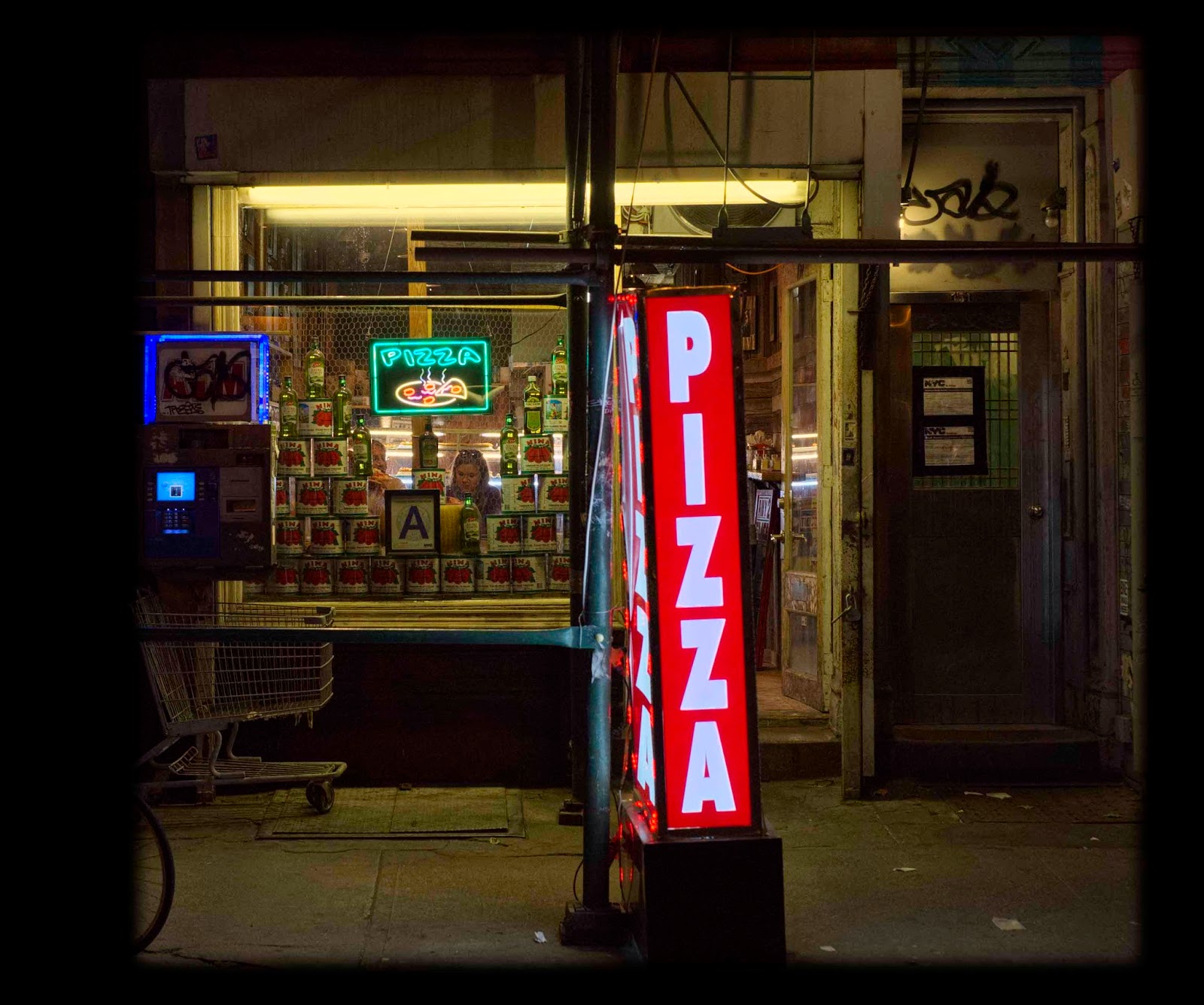


Doorways:
Windows
Restaurants:
New York By Night Part 1
I love to walk around New York City at night and take pictures. Such a variety of things to see! I especially love all the shop windows at night, with all their strange and mysterious displays. Here are a few photos:
Kitchens:


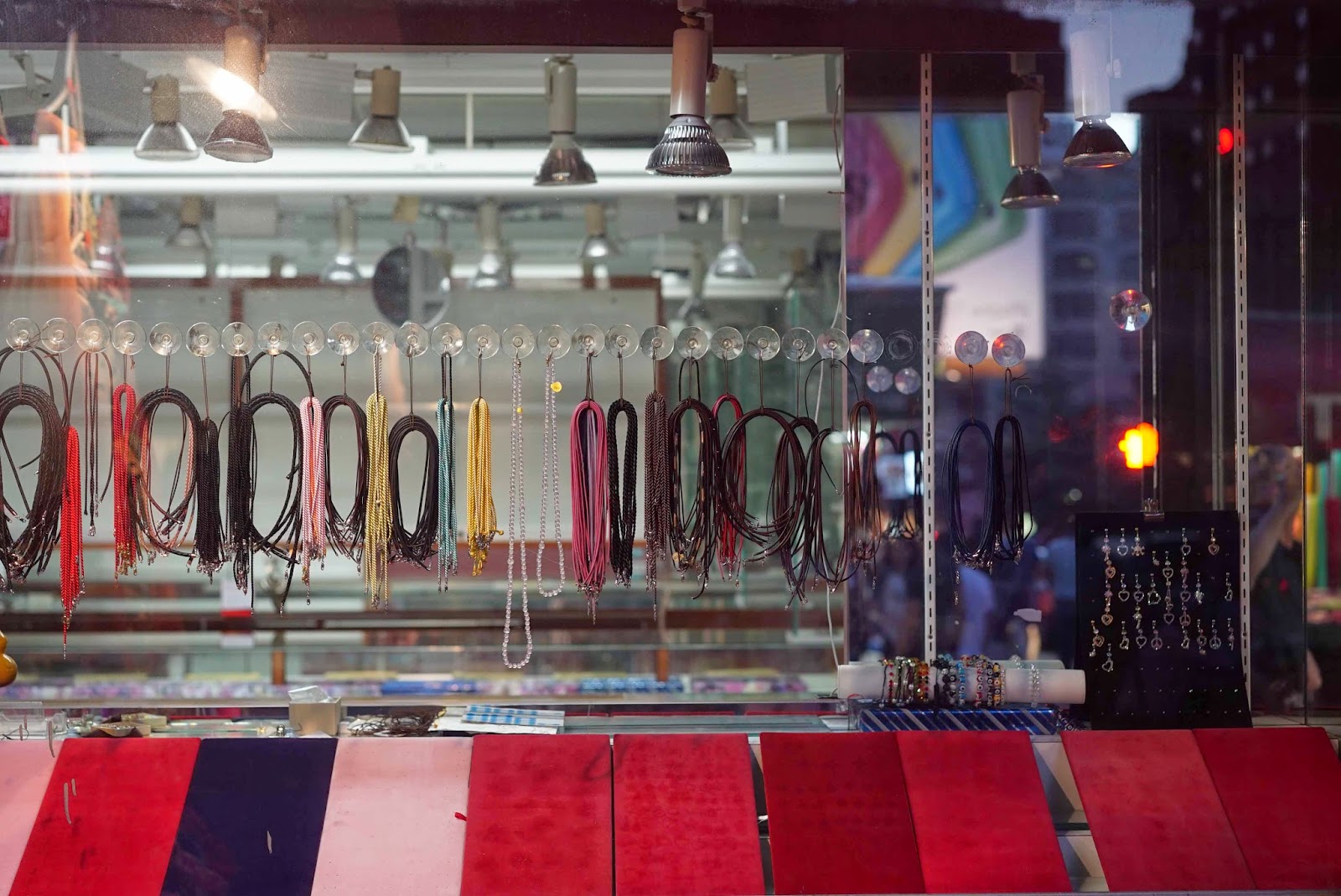


For better or for worse, images from the Jeff Koons exhibit seemed to reverberate in the New York streets...

A new project for Koons? Make these flowers out of granite?


Window of an Indian restaurant:

A store window:

Kitchens:
Store windows:
For better or for worse, images from the Jeff Koons exhibit seemed to reverberate in the New York streets...
A new project for Koons? Make these flowers out of granite?
Window of an Indian restaurant:
A store window:
Subscribe to:
Posts (Atom)