Sunday, 15 November 2015

A Short Visit To Queens

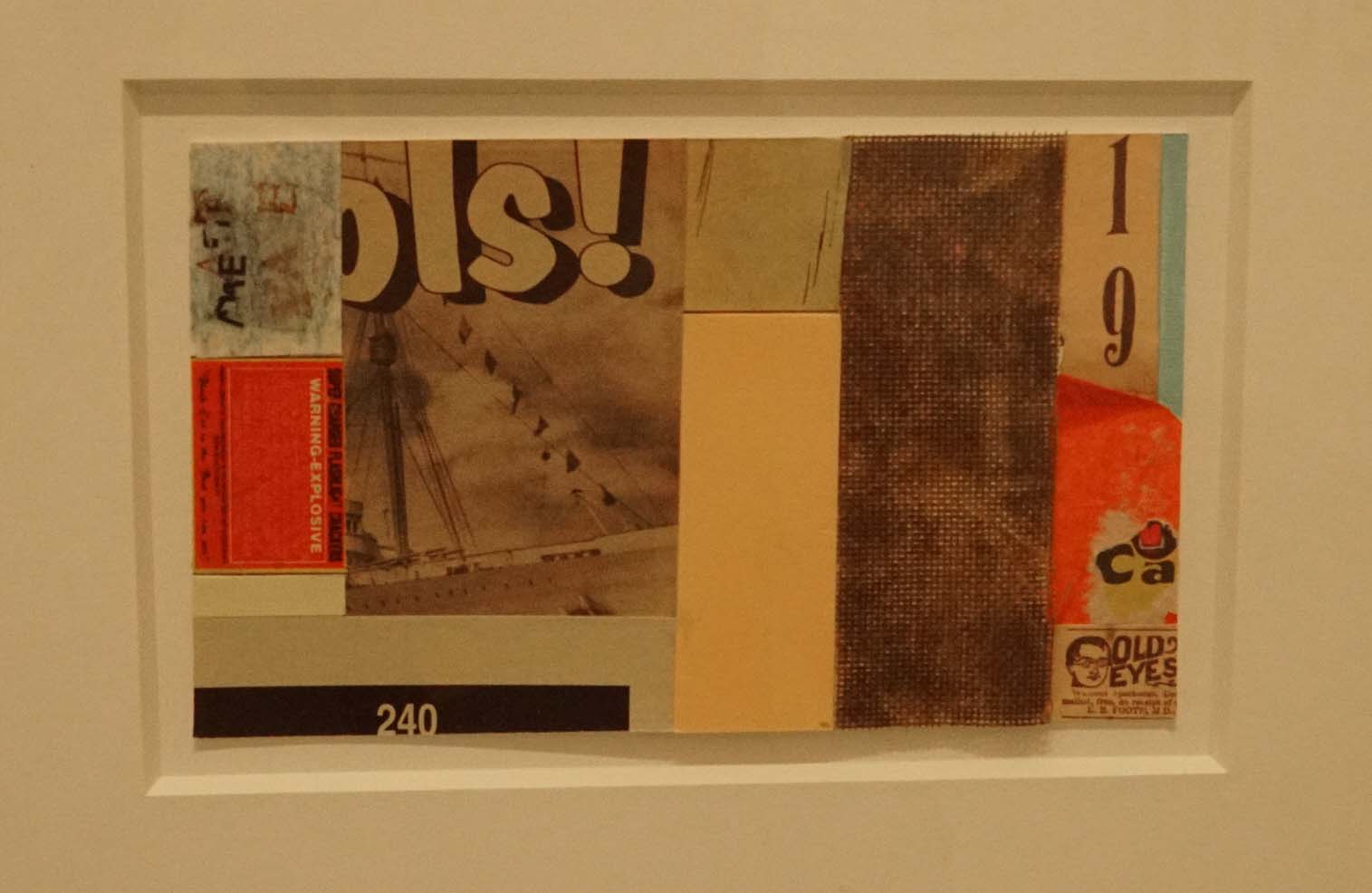
Last summer I went to see a show by the artist Robert Seydel at the Queens Museum in Flushing Meadow Park.  This was the site of the 1964 Worlds Fair, which I remember going to.   But I haven't been back since; several of the monuments and buildings remain, including one which is now the Queens Museum (which was actually built for the 1939 World's Fair).

The Unisphere, which I last saw close up 50 years ago.


The park itself is mostly a flat, featureless space with some trees, a neglected part of the city park system.  But it is open green space.

One of the feature attractions of the museum is the giant scale model of New York City, which theoretically includes every building in all 5 boroughs.  It is quite amazing, though not all the lighting was working the day I was there.  Strangely, all of lower Manhattan and part of Brooklyn was in the dark...


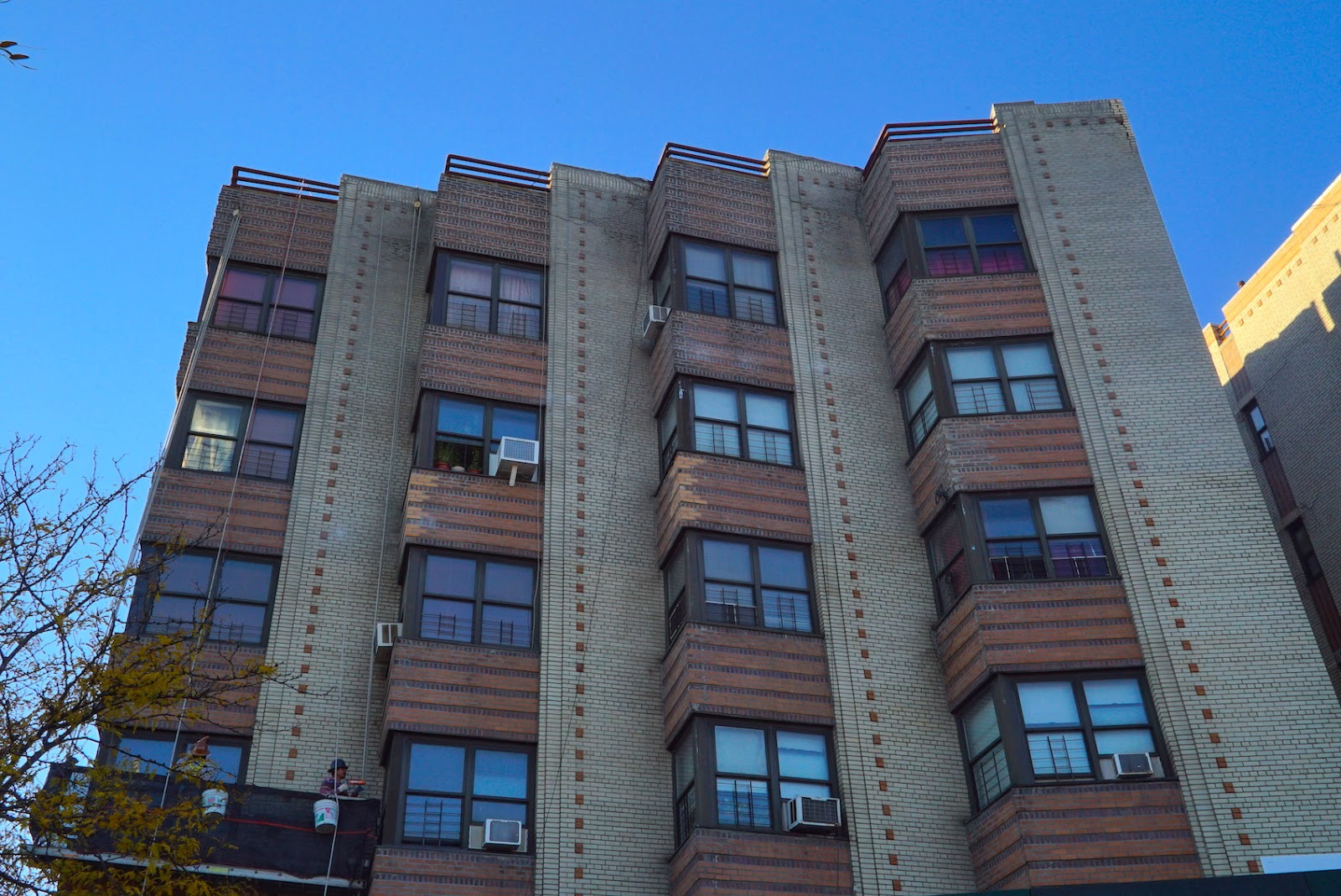
We live in one of those buildings..


Midtown:


A transparent floor allows you to hover directly over Queens:


Elsewhere in the museum there is also a large relief map of the NY watershed:


The show of works by Robert Seydel was interesting.  The works were primarily collages, working in the mode of Schwitters and evoking the worlds of Joseph Cornell.   He created a whole sort of fictional world with characters who lived in Queens.  He also created books with written texts along with collages.


Then it was back to Manhattan on the 7 train.

Saturday, 14 November 2015

More Music, More String Quartets

I went to Zankel Hall to hear the St. Lawrence String Quartet; the program was potentially a great one, featuring a Haydn quartet from the inventive Op. 20, Beethoven's late Op 131, and the New York premiere of a new quartet by John Adams.
The Adams work was confounding; the first movement takes two short phrases from Beethoven's Piano Sonata Op. 110, and develops a whole movement out them.  To begin with, it is fascinating.  We hear the very recognizable fragments repeated endlessly and subjected to all kinds of rhythmic and harmonic transformations.  Sometimes we are in a somewhat Beethovenian landscape, and other times we are in recognizable Adams territory, with gradually shifting and disjunct rhythms and clashing harmonies.  It builds to an energetic climax.  The second movement does very similar things with a vert small fragment from the Diabelli variations, starting slow and building up to a dense and energetic climax.  But at the end, I was thinking, so what was that all about?  Adams, to my ears, never really transcends the initial notion of using the Beethoven motives; the piece feels very uncomfortably in between the two worlds.  Is he channelling Beethoven?   Emulating him?  Commenting on him?  Who knows?   Maybe that's the point?

Or maybe the quartet's performance had something to do with it.   For the truth of the matter is that, starting from the opening Haydn quartet, I really didn't like the quartet's style of playing, which emphasized intensity over almost anything else.  There was little in the way of ensemble balance, phrasing, and sensitive interaction between the players.  The first violinist was consistently and flamboyantly louder than the other players, and the violist was played constantly without any sense of expression at all.  These tendencies really took a toll on the Beethoven; one of the great masterpieces of chamber music, it was pretty much slaughtered by the end, with ragged ensemble work and intonation messing up the whole thing.  Just because you play loud and fast doesn't mean that the music is more intense.  I was not happy.

We went to Juillard to hear Axiom, a student contemporary music ensemble, play pieces by Thomas Adès, George Benjamin, and Oliver Knussen  (AKA British prodigy composers of the 1980's).   The two Adès pieces were early ones; "Catch", and "The Origins of the Harp".   They were both inventive and compelling, particularly "The Origins of the Harp" (which has no harp in it; the title refers to a 19th century painting. )
The piece is something of a super clarinet concertino, with a solo clarinet and two supporting clarinets (of different sizes) having the main solo line.   The most exciting piece, though, was George Benjamin's "Three Inventions for Chamber Orchestra".  The dry title conceals the fact that these are extremely dramatic pieces.  The first begins with a kind of tone color melody which brought Webern's "Ricercar" to mind, and gradually adds contrapuntal complexity.   The last piece was almost Bergian in its expressive quality.  Benjamin works with complex and intricate musical ideas, but, at the same time, there is a clear sense of expression, and he always creates unique and special tone colors.  In this case, a euphonium solo and two sets of gongs, stage left and stage right were among the sonic highlights.  (We heard a lot of George Benjamin last summer at the Mostly Mozart Festival.  I am trying to write something about what we heard.  He is probably my favorite contemporary composer right now.)

My faith in string quartets was restored by hearing a performance by the Michelangelo Quartet.   This quartet features violinists from Romania and Russia, a cellist from Sweden, and a violist from Japan.   (What language do they speak in rehearsals?)  Like every other quartet concert I have heard lately, they opened with a Haydn quartet, in this case the very late Op. 77, # 1.   The performance was excellent, and the adagio sounded almost Schubertian at times.   The concert closed with magnificent performance of Beethoven's Op. 59, #2.  The slow movement was as sublimely beautiful as anything I have heard in years.   The quartet played with great subtlety in timbre and phrasing, and wonderfully judicious use of vibrato.   In between was Shostakovich's Quartet #3.  I am woefully ignorant of Shostakovich's music, having come of age in the musical era was Shostakovich was distinctly out of fashion, so I can't say too much.   But my first impressions are not favorable.  His mode of expression does not sit well with me; the alternations of ironic, sardonic, and pathetic or whatever don't work to my ears.    But I will reserve judgement until I hear more.

Sunday, 8 November 2015

Arnie Hits the Big Time: Schoenberg's "Erwartung" in Times Square

There it was; in the catalog listing works being performed in the 2015 biennial of Performa, a interdisciplinary/performance art organization:

"Robin Rhode performs Austrian composer Arnold Schönberg's atonal opera Erwartung (Expectation), transforming it to reflect the experiences of women who have been separated interminably from their husbands by the migrant labor system, political exile, activism and/or imprisonment."

The performance was to be done in the middle of Times Square at 5:00 PM. The whole idea seemed so impossibly far-fetched that, of course, we had to go see it.   How in the world could you do ""Erwartung", one of Schoenberg's quintessential expressionist works, written for large orchestra and soprano solo, in the middle of Times Square?
Well, they did it.   There was an orchestra (reduced and amplified), and an excellent soprano.   It fact, it was a fairly straightforward production; luckily the artist Robin Rhode, who was listed as "performing" and "transforming" the piece did very little of that.
The production was well done; and they even handed out a glossy large type booklet with the libretto and an English translation (not the normal thing that gets handed out to you in Times Square).   But, needless to say, hearing and seeing this in the middle of Times Square is a totally strange experience.  (Though I can hardly imagine how strange it might have seemed to the average denizen of Times Square.)   To begin with, the amplification was uneven, so that some instruments sounded loud and clear, while others were inaudible.  And of course the low roar in the background was always there.   The lighting effects created by all the huge illuminated sounds, though, were extraordinary; and the juxtaposition of all the advertising language (Revlon "Love Is On") with the woman protagonist hallucinating made for some very strange contrasts.   But simply the effect of seeing this dense Expressionist musical work that is over a hundred years old performed in the sensory maelstrom that is contemporary Times Square is something I will long remember; a kind of strange cultural dissonance in which the two elements resonated in the best possible way.  It certainly made you think differently about the Schoenberg.

Photos:
(The costumes were apparently based on Schoenberg's own sketches; I have no way of knowing whether this is true.)

The setting, staged in the round, with the orchestra on the left:


Singer, audience, signs:


Singer, arms, Police Dept.:


Suddenly, the lighting was pink:


There was a mute actor playing the part of the missing lover:


 Singer with the orchestra in the background:


While we were in Times Square, I wandered and took a few photos.  The general chaos of pedestrians, stores, and lighting was increased by a large amount of construction in the middle of it all.   I am always intrigued by the odd things that are left around, all of them transformed by the strange light effects:


Erwartung was not the only music being performed:


Do these endless souvenir stores ever sell anything?


Wednesday, 4 November 2015

The High Bridge and the Grand Concourse

It was a very warm November day, and I decided to walk the newly re-opened pedestrian-only High Bridge.  The bridge is in fact the oldest in New York; it was originally built in 1848 as part of the Croton Aqueduct system to bring water to New York City. It was closed for many years, and has been newly restored.  It connects upper Manhattan with the Bronx, spanning the Harlem River.  There are parks at either end; mostly in a state of neglect, but clearly on their way to being restored.   There is also a water tower at the Manhattan side, which was used to pump water to its ultimate destination, the 42nd street reservoir.  

View of the approach to the bridge through the park on the Manhattan side:


The bridge:

The walkway:

The view from the bridge is not really that great; you see the river, expressways, railroad tracks, etc.


Looking back towards Manhattan, with the water tower in the distance:


After you cross the bridge, you are in the Bronx.   I decided to head for the Grand Concourse, the famous boulevard of the Bronx, renowned for its Art Deco architecture.
On the way, I saw a few things...
A peculiar house, on the edge of the High Bridge Park (and a cliff)

 Who knew that Shakespeare had a street in the Bronx?


And yes, the Art Deco apartment buildings, built in the 1930's when the Bronx was the new place to go for the middle class.


This was once the tallest building in the Bronx, built in 1914


The invaluable AIA Guide to New York is a wonderful companion on these walks, especially as it is available in a Kindle version on my phone.

Other photos:


This would seem to be a church, in the process of being restored:


Old and new:


The Grand Concourse is a very long street!   I hope to return soon to see other parts of it..


Sunday, 1 November 2015

Dances: After You, The Green Table, Partita 2

Thanks to our friend Santa (who recommended it), we went to see a program by the American Ballet Theater.  I had always associated the ABT with ballet stars and Swan Lakes, but this program was completely different.  It began with a newly commissioned work by Mark Morris entitled "After You", set to Hummel's "Septet".   This was one of Morris's very music oriented works, and was delightful to watch and hear.  As always, Morris works very closely with the music in ways which are both very obvious and not so obvious.   It was not seemingly a profound work, with its rather bland appearance, but, at the end, you want to see it again.  I was also fascinated by Hummel's music, which also seems to have more going on than what appears on the surface.  A critic called the piece an "anti-ballet", I suppose meaning that it rejects many of the typical conventions of classical ballet (Virtuosity, male-female partnering, etc.), but for me, since I don't normally experience these conventions, the idea means nothing.   It's a Mark Morris piece!
Quotes from Mark Morris:

Notes to his dancers:  “ ‘Dazzling.’ ‘Breathtaking.’ You don’t have to do those slogans so it looks like the ABT calendar,” he said. “I want to know that there is a human being doing it.”

“I want it to be enjoyable. It’s a choreo-musical experience, and that’s it.”

Note that the men and the women have the same costumes:


There was also a pair of pieces dating from the 60's called "Monotones" by Frederick Ashton, set to various orchestrations of Satie's piano music.  (The Satie pieces were also joined together to make a continuous score.)  The dance was a slow and mesmerizing experience; Ashton was supposedly inspired by the first images of astronauts floating in space in the 1960's.  The movement did have a wonderful floating quality to it, and the Satie with its simple and non-developmental quality served this idea very well.

The highlight, though, was Kurt Jooss's "The Green Table", an antiwar ballet dating from 1932, set to music composed specifically for the ballet by Fritz Cohen (a two piano score).  Interestingly, the dance was inspired by the same frieze in Lubeck that inspired the Thomas Ades "Totentanz" that we heard last spring.   It is a narrative ballet, with a dancer playing "Death".  Since I know so little of dance history, the piece was a revelation;  the movements in what has been called an expressionist style were striking, especially those of Death and those of the women who are made to suffer the consequences of mankind's obsession with war.  Some of the women's gestures reminded me of expressionist paintings or Schiele drawings.  You really feel the impact of the Death character, who sometimes suddenly appears out of darkness to grab his victims. The piece begins and ends with opposing groups of diplomats or one percent types  gesturing at the green table with great ridiculousness.  The music was excellent as well.  At times it evoked the contemporaneous silent film scores, and was quite dissonant when it needed to be.

Death:


The green table:


We also saw (again thanks to Santa!) a piece entitled "Partita 2" by Anna Teresa De Keersmaeker.    The piece begins with a solo violinist walking on a bare stage.   The lights go completely out, the theater is in absolute darkness, and the violinist begins to play Bach's Partita #2 for violin solo.   This goes on for quite a while, and was a remarkable experience just by itself.  I often close my eyes when I listen to music; in this case, the closing was done for me.   For a dance show, this is a radical gesture.  After about 15 - 20 minutes of the partita, the violinist stops in the middle of a movement and walks off stage.  The light gradually emerges, and the two dancers, Keersmaeker and her co-creator, Boris Charmatz, begin dancing in total silence.  Though of course you still have the music of Bach in your head.   After an equally long stretch of dance in silence, the violinist re-enters the stage, and then we have music and dance together.   The violinist starts the Bach all over again, and then we gradually see some parts of the choreography that we have already seen recur, only this time with the music.  The choreography itself is quite minimal, and not dramatic in any conventional sense.  Lots of movement in circles around the stage, and many small gestures.  But to my eyes (and ears), it was mesmerizing; Keersmaeker is an extraordinary dancer.    Vera and Santa were less impressed.   The piece as a whole seems to be very much about structure, and also about how we hear and see Bach's music. (Somewhere in an interview Keersmaeker or Charmatz commented about the fact that no one has ever made a great piece in choreographing to Bach's music, forgetting Balanchine's "Concerto Barocco")    I found the whole experience to be fascinating, and would happily go and hear and see it again.   Though I must confess that I did not like the violinist's style of playing Bach, especially in the opening section.  It was of the romantic, tempo shifting style; with exaggerated slowing down and speeding up.   Bach purists would have shuddered.  (The movements in the Bach are each titled with dance forms, not that Bach expected anyone to dance to them.)  Curiously, though, I didn't mind the same style of performance when it occurred with the dance.