Tuesday, 30 September 2014

Goodbye To Language: Godard and Ives

We saw/heard Jean-Luc Godard's latest film, "Goodbye To Language" at the Vancouver Film Festival.  Godard, who first began making feature films 55 years ago(!), is not letting up.   His film, made in 3-D, is an irascible and stunning collage of sounds and images in his late, non-narrative style.   There is some sort of story about a couple that talk, argue, talk, have sex, talk, and adopt a stray dog.   The dog, Godard's, is actually the star of the movie (there was a special award at Cannes!).   The film juxtaposes fragments of dialogue or thoughts from writers like Beckett, Badiou, etc. along with images from old movies, fragments from different kinds music, images filmed from all kinds of cameras, including cellphones.   And it's all in 3D, which lends an extra dimension to the layering of images. (If only he would do surround sound, too, instead of his normal stereo.   Though he claims he can only do stereo because he only has two hands for the mixing board.)   Godard, needless to say, uses 3D in totally unconventional ways.  In several cases, he uses two completely different images instead of the conventional 3D images that are from slightly different perspectives.  The result is that you can't actually focus; you either shut one eye and focus on one image, or you try to look at both and get a headache.   (The first of these kind of shots apparently elicited a spontaneous ovation in the middle of the Cannes showing of the film; not so in Vancouver.)  I am not conversant with the current French philosophical discourse to which many of the texts seem to refer; I can only let it all kind of wash over me.   To say what it is all about is beyond me.   (Apparently Tom Stoppard, when asked by critics to say what "Rosencrantz and Guilderstein" is about, said it is about two courtiers in Hamlet's court.  End of discussion.)   In that sense, is the Godard is about its own discourse?   I am content to be bombarded with images and sounds in a way that challenges me.  In this case, I felt that Godard was in a slightly more mellow mode, in that there was quite a lot of repetition of certain fragments, which lent a kind of structural continuity which I usually don't get in these late Godards.  And he has certainly never focused on a dog!   (We were with a professor of French, who didn't like the movie because it was something that would be a perfect subject for teaching.)

This one looks great in 3D:


 Godard filming with his cellphone:


The couple, with Miriam Hopkins in the background:


Two days later, we heard the pianist Stefan Litwin in a fantastic performance of Ives' "Concord" Sonata.   I was struck by how much the Godard and Ives had in common.  The Ives, composed over a hundred years ago, makes a radical break with musical language as it existed at the time. And in fact, it still sounds radical.  To me, Ives music is about the non-linear juxtaposition of fragments of music, both simultaneously and sequentially.   Ives does not proceed with the conventional discourse of musical expression as in, for example, a dynamic expressive buildup, followed by a calmer more meditative moment.  Things simply appear, disappear, break off.  There is a constant level of dissonance, but it is not meant to convey any sense of tension in the traditional sense.   What can be confusing is that Ives uses conventional musical material which can normally be considered expressive.  In the later movements, as in the "Alcotts", some of the conventional material shines through more clearly, and becomes expressive.  

Friday, 12 September 2014

Metropolitan Culture

We have a friend who once said that he would only really want to live in a metropolis, as opposed to a city.   Spending time in both Vancouver, which is a small city, and New York, which is a metropolis, I can testify to the difference.

The term "metropolis" comes from the Greek, meaning "mother city".   What we normally mean is a just a really big city.   What is significant for me is that these days it seems that only a metropolis can sustain larger scale artistic enterprises like symphony orchestras, opera companies, dance companies, art museums, etc.   In some cases, it is merely a matter of numbers.  If, say, one could think that maybe one out of one hundred people might have the inclination to attend a symphony orchestra concert, then a orchestra in a city of 500,000 people might have a pool of 5,000 possible attendees, while a city of 5,000,000 might have 50,000 possible attendees.  Which means that it is much harder for the city of 500,000 to have a functional orchestra.  Other factors, though, are equally significant, such as the level of financial support from governments, foundations, and wealthy individuals, and the sense in which the general population has been acquainted with the notion of enjoying the arts.   Furthermore, the presence of the media can play a significant role.   If the daily newspapers and television emphasize coverage of the arts, then that helps.
All of which is to partially explain why a city like Vancouver is barely able to sustain any form of  large scale cultural enterprise, and a city like New York sustains numerous forms.   In Vancouver, there are superb artists in all fields; but there are few chances for anyone to work in a larger scale.  Most of the cultural spaces in Vancouver are repurposed facilities; the main art museum/gallery is a former courthouse, the main concert hall a former movie theater with poor acoustics, and operas and ballet are performed (infrequently) in a 1950's general-purpose theater with terrible acoustics and poor sightlines. In Canada, both Montreal and Toronto have newly built spaces devoted to concerts and opera respectively.  In Vancouver, the provincial government spent 500 million dollars on a new retractable roof for an virtually unused sports stadium (without any public discussion). But since the 1950's, nothing has been built specifically for the arts.   The barely surviving local newspapers have virtually no coverage of the arts. The "entertainment" sections are mostly about Hollywood stars, etc.  The provincial government support for the arts is the lowest per capita in all of Canada, and most of the major corporations have their headquarters and focus elsewhere in Canada. And finally, the population is a heterogenous mix of immigrants from all over the world, which makes for a fascinating cultural melange, but does not make for a strong level of interest in the large scale European traditional forms of culture.  All of which to to say the major cultural organizations in Vancouver are struggling to survive (or have folded, as in the case of the major theater company).  (The artistic director of a major Vancouver arts organization once told me that his main goal as director was to make sure that his company survived.)  In Europe, of course, cities much smaller than Vancouver, such as Linz or Lucerne, can sustain larger cultural enterprises because of both government and popular support.  This, after all, is where all this large scale cultural stuff started.   Vancouver arrived to late in the game to even have any kind of collection of European art; the best museum is the Museum of Anthropology, which has a remarkable collection of aboriginal Pacific Northwest art.

All of which is to say that culture in Vancouver exists in small scale way, when people through extraordinarily hard work and enterprise are able to put together some wonderful events, in spite of all the obstacles that the cultural environment puts in front of them.  (A friend once set up a fund to support dance programs for more than one dancer after seeing so many choreographers reduced to producing solo shows for lack of money.)  And Vancouver does have a chance to be a laboratory for an experiment in determining what kind of culture emerges in a post-European world; what will emerge from this blend of people migrating from all over the world, each bringing with them their own cultures. (About 50 percent of the population of Vancouver does not speak English at home...)


Vancouver Photos

In Vancouver, we have many things to see.  

We have small mountains, seen at night:


We have hummingbirds:


We have a lot these kind of apples:


But not any of these kind of apples:


Plants tend to grow a lot:


We also have a blue planet in the sky:


Sunday, 7 September 2014

New York By Night Part 2

More New York nightscapes... (click to enlarge)

Doorways:


Windows


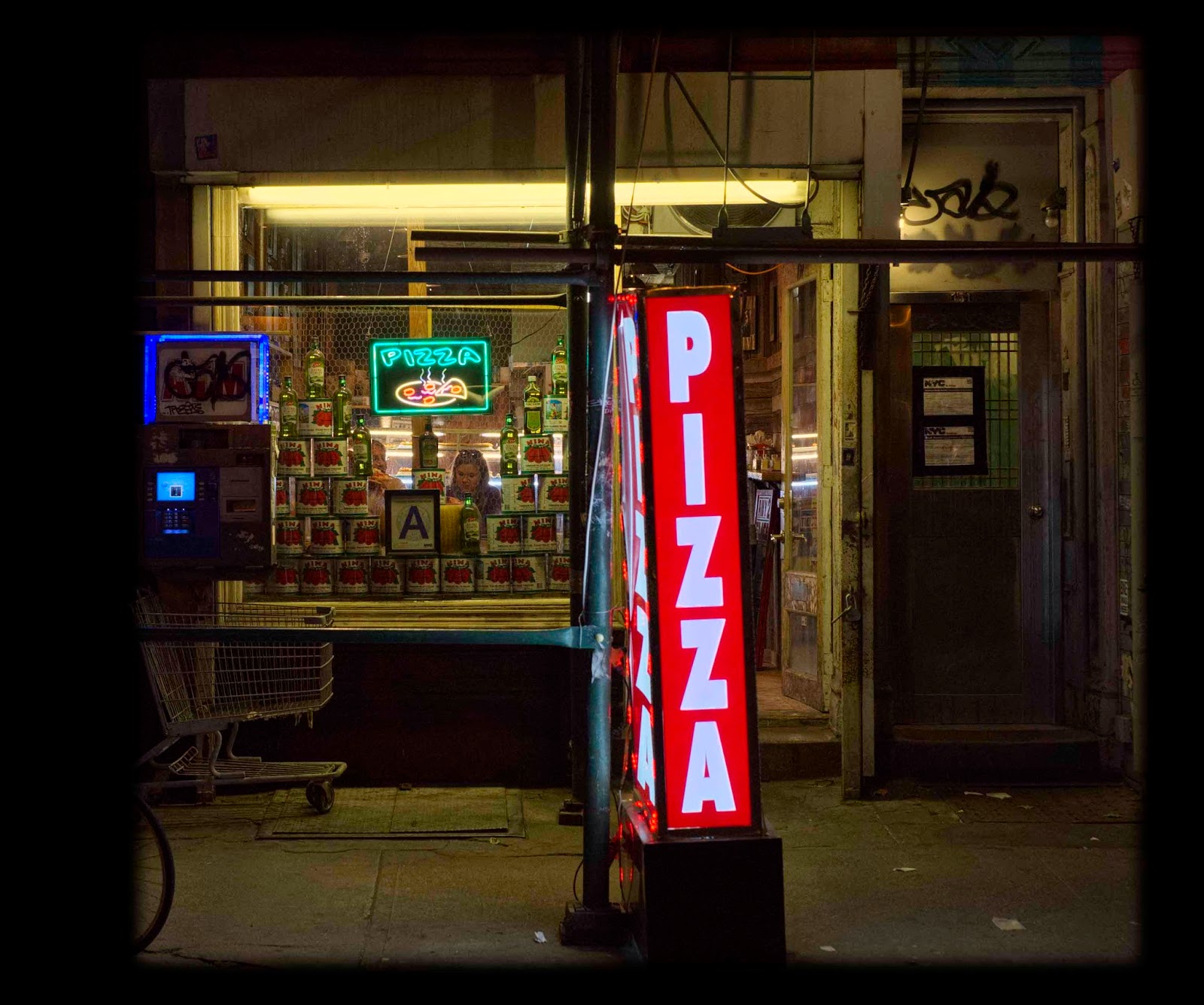
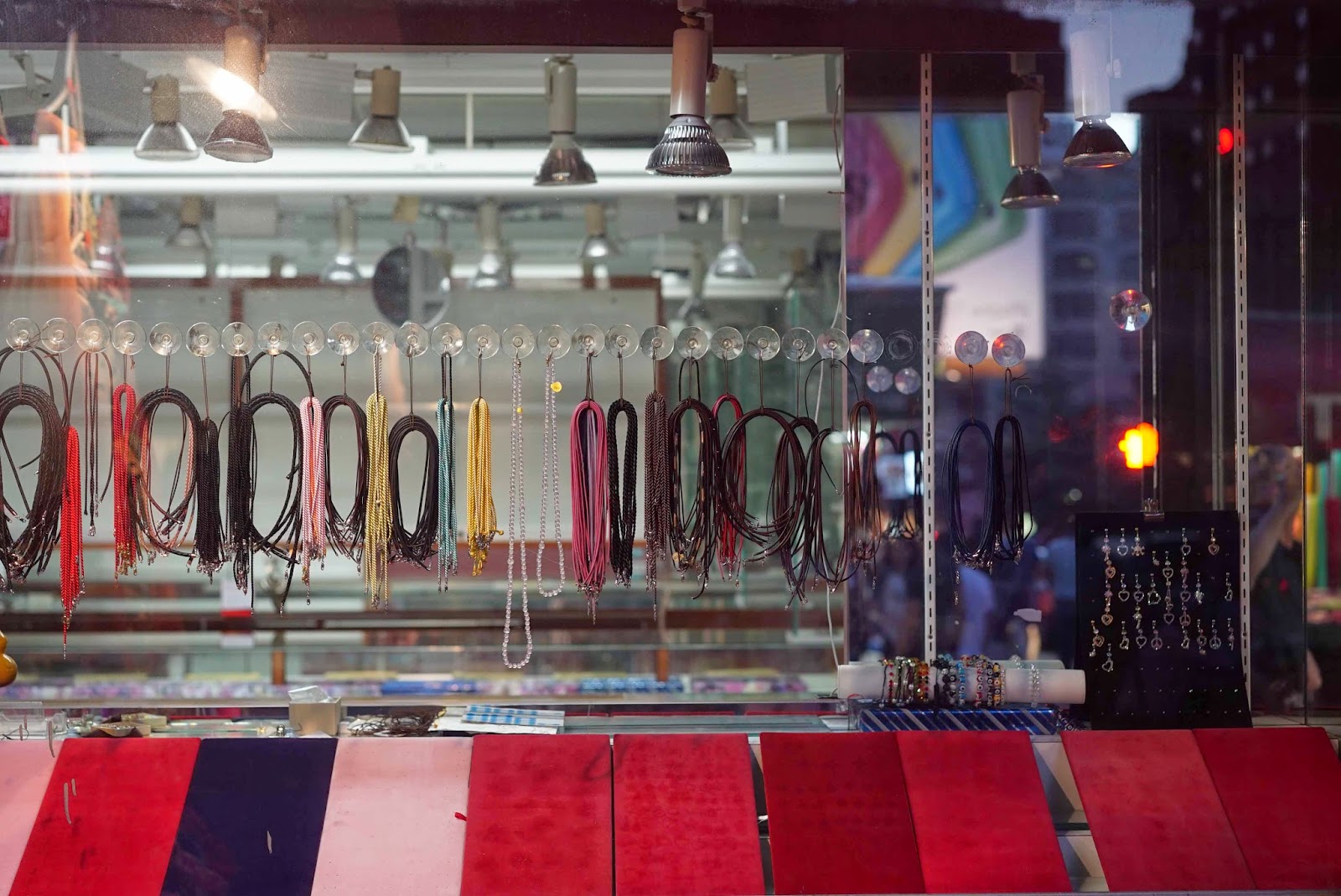
Convenience stores and stores full of things:


 Laundromats:


Restaurants:


New York By Night Part 1

I love to walk around New York City at night and take pictures.   Such a variety of things to see!   I especially love all the shop windows at night, with all their strange and mysterious displays.  Here are a few photos:

Kitchens:


Store windows:


For better or for worse, images from the Jeff Koons exhibit seemed to reverberate in the New York streets...


A new project for Koons?   Make these flowers out of granite?


Window of an Indian restaurant:


A store window:


Wednesday, 3 September 2014

Metropolitan Museum Wanderings Part 3

More wanderings...

I went to look at installation art at the Metropoltan Museum, which abounds there.   By that I mean the period rooms that can be found all over the museum, interior spaces that have been meticulously reconstructed to resemble the original spaces.   (Kind of the opposite of site specific art, if you will...)   The rooms range from the Damascus room to the bedroom of a Roman villa to my new favorite, a "studiolo" from a ducal palace in Urbino around 1500.   This room, intended as a small space for study and meditation, has walls entirely of wood inlay, with various trompe l'oeil effects, and lots of musical instruments.


Then there are all the period rooms, which attempt to display the kind of interior decoration used in various European palaces.   I get a very odd feeling from these rooms; an interior, without natural light, deprived of all context, inside of a large museum in contemporary New York City.  Where am I?    The oddness may also have something to do with bringing back memories of the innumerable European palaces and stately homes that I was dragged through in my youth on family vacations.   Did I really care what the interior of rich peoples houses from the past centuries looked like?   Though I do get some pleasure out seeing places with authentic historical resonance, like the Winter Palace in St. Petersburg.

But this bedroom looks very welcoming...


Later, I saw this as I was wandering through the Lehman collection, one of my favorite places in the Met.


You never know what you will find!