Friday, 10 February 2017
Bruckner and Furrer
I have never been a big fan of the music of Anton Bruckner. Part of my attitude comes from the fact that I have never heard the music live. So when I found out that Daniel Barenboim and the Staatskapelle Orchestra were performing the complete symphonies at Carnegie Hall, I thought I should check it out. I went to a rehearsal of the 7th symphony and we both went to a performance of the 8th symphony, generally considered to be his best. I came away considerably enlightened as to what Bruckner is about, but also with a clearer sense of why it is that I am not absolutely fond of the music. First of all, I have to say the performance was superlative; I can't imagine an orchestra doing this music any better. And Barenboim really knows the music, apparently he conducted the entire cycle from memory (along with playing several Mozart piano concertos on the same concerts!)
But I have to say that I think Bruckner must be the most rhythmically uninteresting composer in the canon; everything is so square, and there is very little in the way of rhythmic excitement. Austerity rules; nothing is flashy. But he has a magnificent ear for building up long sequences with contrasting harmonies and orchestral textures. If you adjust to his sense of musical development, the music becomes interesting. It feels very much like architecture, in this case created on a grand 90 minute scale.
A few days later, we went to a Composer Portrait concert of the music of Beat Furrer at Miller Theater. I had heard of him, but had never encountered a live performance of his music. It was a great concert; I really liked his music. Furrer is Swiss but lives in Vienna. I would situate his music somewhere in the territory of Lachenmann and Haas, with some of the rhythmic liveliness of Nancarrow. My favorite piece was "Spur", which you can find on YouTube with a video of the score. The music is quite dense and fast, but, at the same time, you have a real sense of shape and contrast to the piece. (What was very vivid and clear in the live performance though, does not come across so well in the YouTube version.) He has a wonderful sense of instrumental color and how to make the unorthodox sound musical (like Lachenmann). The performances by the ensemble Either/Or, were astonishingly good. The musicians played with both great conviction and virtuosity; they clearly knew what they were playing.

Kerry James Marshall
My brother David and his wife Kim were in town, and we went to see the Kerry James Marshall retrospective at the Met Breuer. It was a great show, and a good example of how a large-scale retrospective can have a much stronger impact than just a few exhibited paintings. Marshall is both brilliant in his ideas and virtuosic in painting skills. To the extent that the work of any artist can be reduced to a few sentences, Marshall's project is about the insertion of the African-American experience into the broader tropes of art history. While I am normally adverse to the use ideological constructs, in this case, the sophistication of Marshall's conceptions and the skill with which he creates them is dazzling. The paintings are fascinating to look at, filled with visual ideas that are subtle and intriguing. And he uses all kinds of other materials worked into the texture, even gold glitter (!).
These photos from the Met's website don't really do justice to the work; not only are most of the paintings really large (10-12 feet wide or bigger) so the fine details of the work are not visible in these photos, but all the subtle gradations of black simply don't come through.


The was a very nice component of the show called "Kerry James Marshall Selects", where Marshall was given the opportunity to go though the Met's collections and pick out works that he wanted to be shown with his retrospective. It was a fascinatingly diverse and revelatory selection which resonated wonderfully with the show. It also showed what the Met can do that not many other museums can do. A great exhibit!
These photos from the Met's website don't really do justice to the work; not only are most of the paintings really large (10-12 feet wide or bigger) so the fine details of the work are not visible in these photos, but all the subtle gradations of black simply don't come through.


The was a very nice component of the show called "Kerry James Marshall Selects", where Marshall was given the opportunity to go though the Met's collections and pick out works that he wanted to be shown with his retrospective. It was a fascinatingly diverse and revelatory selection which resonated wonderfully with the show. It also showed what the Met can do that not many other museums can do. A great exhibit!
Wednesday, 1 February 2017
Hawaii
It is with some trepidation that I write of our January trip to the island of Maui, not wishing to induce tropical beach envy in those who are shivering in the colder parts of the world. We went with Ada and Andrew, and rented a condo near the beach. There are few things I like more than swimming in the ocean, although I am sun-phobic, and want to be in the shade whenever possible. We did have a wonderful time, and the non-beach part of that time was spent exploring the fascinating landscapes of the island. The highlight, for me, was our trip to the summit of Mt. Haleakala, a 10,000 foot high volcano. The drive up the mountain takes you through a number of different climate zones, and at the top you arrive at a beautiful and desolate lunar-like landscape. We were above the passing clouds, and overlooking the eroded crater of the volcano. The landscape has extraordinary colors and shapes. Because the mountain begins at sea level, you get a real sense of elevation, as if you were flying 10,000 feet above the sea.
The clouds below us on our way up:

Overview of the eroded crater:


A view of the road, then a steep drop to the ocean, with the big island of Hawaii in the distance.

The summit has very colorful lava formations:


These plants, called silverswords, grow nowhere else in the world.

A lot of views of the colors of the eroded crater:


Sometimes there are overhead clouds that block the sunlight, except in a few spots, creating patterns of shadow and light:


Another fascinating excursion we took was on a one lane road (backing up on cliffside roads was frequently required!) around the northern part of the island. Here the rocky landscape featured cliffs and crashing waves; it felt like we were in Scotland or someplace like that, very far removed from the world of sunny beaches. We stopped and climbed around the volcanic rocks. It was very special.


A closeup of some of the colorful parts:


A lunar landscape:


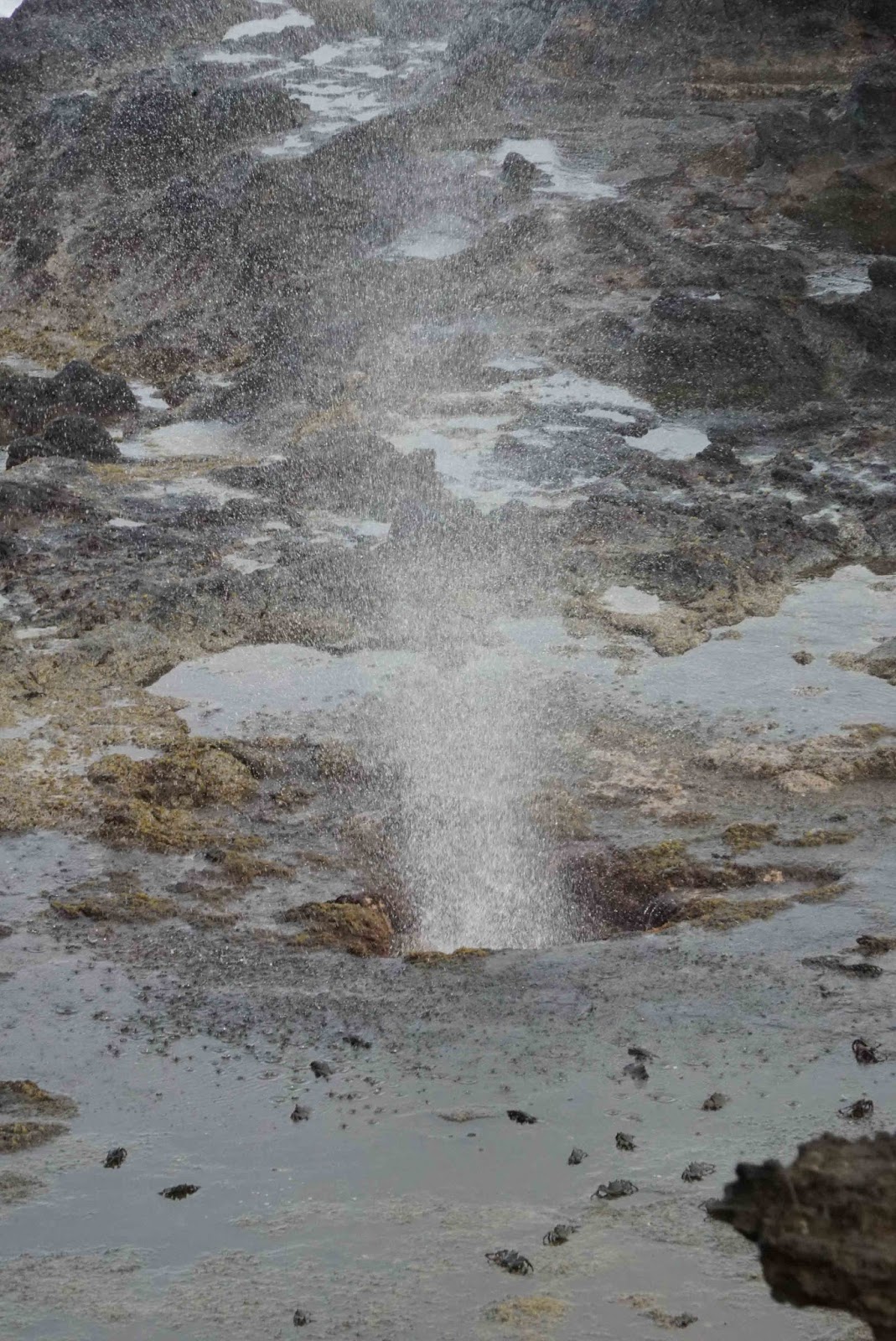
A blowhole:

Amidst all the grey and black rocks, there are sometimes striking bands of color:


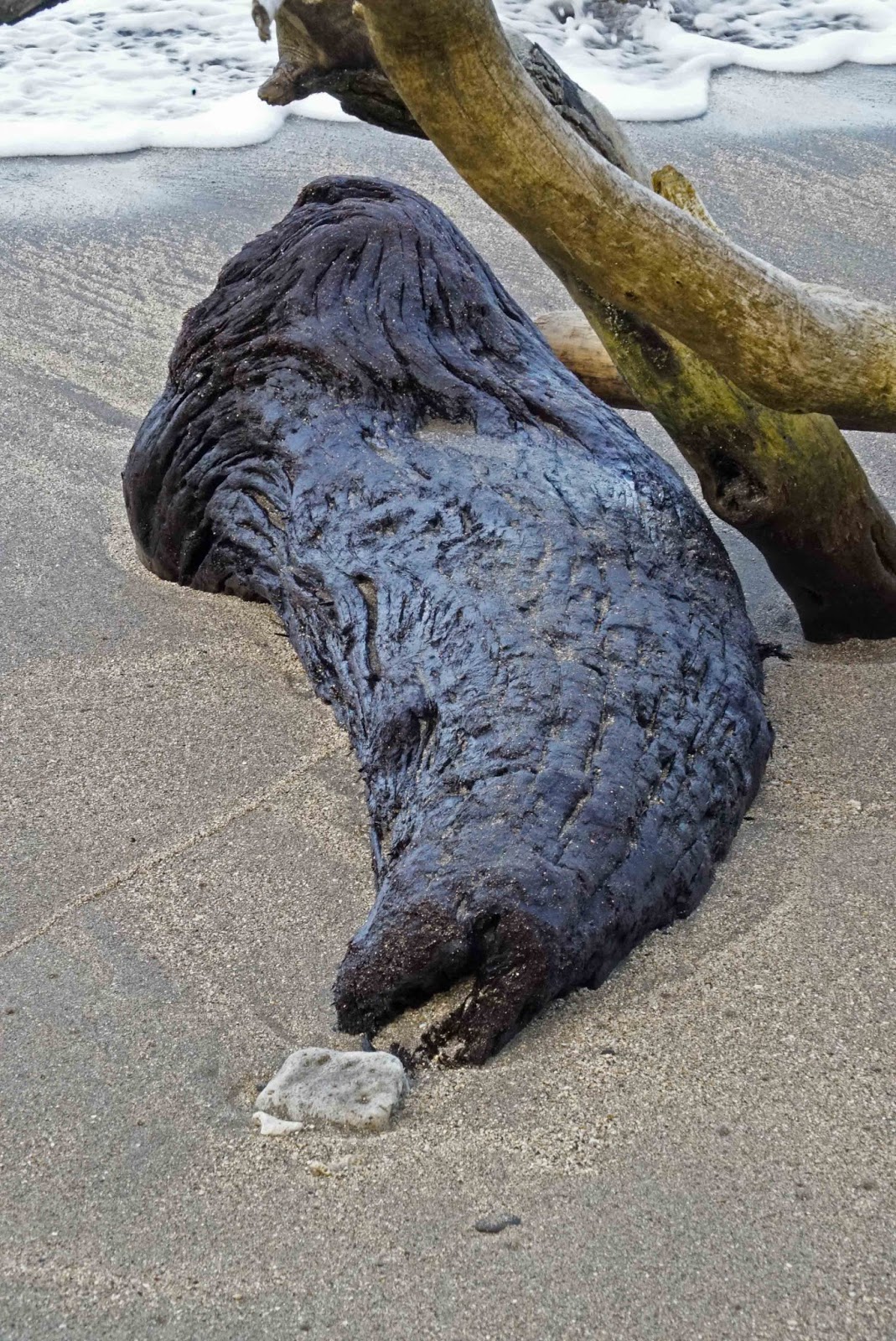
We also did a walk on a beach which felt more like Vancouver Island than Hawaii, with washed up logs and rainforest vegetation:


This was an area on the south coast, site of the last volcanic eruption on Maui, where there were fields of rough lava next to the sea. It's called La Perouse Bay, after the French explorer who was the first European to arrive on Maui. He had been commissioned to claim the land for France, but decided he had no right to do so, and sailed onwards:

Black lava with bleached coral:

Not a place to go walking...


Lava fields with more fertile land in the background:

Oh, and I almost forgot the tropical sunset!

The clouds below us on our way up:

Overview of the eroded crater:


A view of the road, then a steep drop to the ocean, with the big island of Hawaii in the distance.

The summit has very colorful lava formations:


These plants, called silverswords, grow nowhere else in the world.

A lot of views of the colors of the eroded crater:


Sometimes there are overhead clouds that block the sunlight, except in a few spots, creating patterns of shadow and light:


Another fascinating excursion we took was on a one lane road (backing up on cliffside roads was frequently required!) around the northern part of the island. Here the rocky landscape featured cliffs and crashing waves; it felt like we were in Scotland or someplace like that, very far removed from the world of sunny beaches. We stopped and climbed around the volcanic rocks. It was very special.


A closeup of some of the colorful parts:


A lunar landscape:


A blowhole:
Amidst all the grey and black rocks, there are sometimes striking bands of color:


We also did a walk on a beach which felt more like Vancouver Island than Hawaii, with washed up logs and rainforest vegetation:



This was an area on the south coast, site of the last volcanic eruption on Maui, where there were fields of rough lava next to the sea. It's called La Perouse Bay, after the French explorer who was the first European to arrive on Maui. He had been commissioned to claim the land for France, but decided he had no right to do so, and sailed onwards:

Black lava with bleached coral:

Not a place to go walking...


Lava fields with more fertile land in the background:

Oh, and I almost forgot the tropical sunset!

Subscribe to:
Posts (Atom)